Cavitation Damage
Vapour bubbles formed in low-pressure zones collapse and hit the surface with extremely short but very high pressure pulses. The result is spongy, rough pitting, loss of efficiency, noise and vibration.
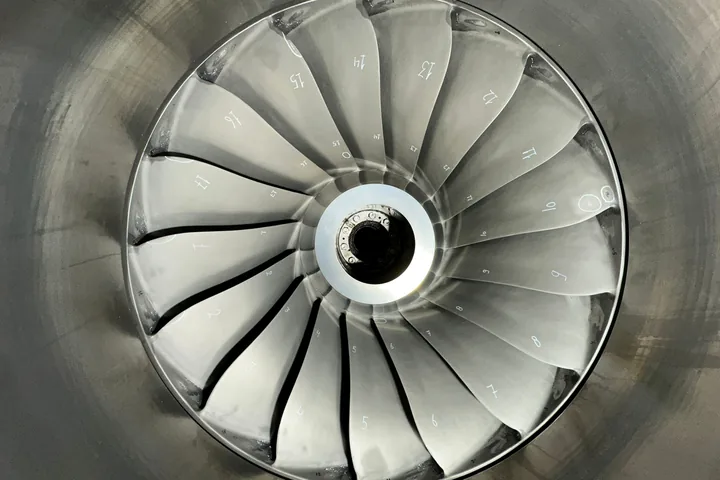
Symptoms
- Spongy, porous, rough pits (mostly on the blade suction side and trailing edge)
- Gravel-like noise and vibration in the pump or turbine
- Drop in head and efficiency
- Perforated blades or broken-off pieces
Typical Parts
When fluid pressure drops below vapour pressure, bubbles form; when pressure rises again they collapse at the surface. Repeated micro-impacts fatigue the material and tear it out. In sandy water erosion and cavitation act together and damage accelerates sharply.
Which Process for Which Case?
With cavitation, geometry is restored first; then a surface suited to the damage mechanism is selected.
| Solution | Material System | Typical Thickness | When Is It the Right Choice? |
|---|---|---|---|
| Weld restoration + profile grinding | Cavitation-resistant stainless / Co-based filler | Depends on pit depth | First step: fill the pits and restore the original hydraulic profile |
| PTA overlay | Stellite (Co-based) alloys | 1.5–4 mm | Tough, resistant surface in heavy cavitation zones |
| HVOF thermal spray | WC-CoCr | 200–400 µm | Zones where sand erosion dominates or acts together with cavitation |
| Combined solution | Welding + PTA + HVOF | By zone | Cavitation and erosion zones on the same part protected separately |
Values are typical ranges; the final choice is made after the part, base material and operating conditions have been seen.
Coating alone does not remove the cause of cavitation
The root cause is often hydraulic: insufficient suction pressure (NPSH), a wrong operating point, throttled operation. During repair we photograph and report the damage locations; this also gives the plant data to correct operating conditions. If the profile is not rebuilt correctly, a new cavitation zone can form.
FAQ
Can a cavitated pump impeller be repaired?
If material and damage depth allow, yes: pits are filled by welding, the profile is ground, the surface is protected if needed and balance is checked. For perforated or cracked blades weldability is assessed first.
How do you tell cavitation from erosion?
Cavitation leaves spongy, sharp-edged pits, usually in low-pressure zones. Erosion leaves smooth, wavy wear marks in the flow direction. We can make a first assessment from photos.
How long does a turbine runner repair take?
It depends on part size and the amount of damage; we build the work schedule around your planned maintenance outage.
Let’s Talk About Your Part
Take a photo of the damaged area and send it by e-mail or WhatsApp, or call us directly. On the phone we identify the mechanism together and give a suitable process and a rough cost/lead-time indication in the same call.
- Close-up and overall photo of the damaged area
- Diameter / length or a technical drawing
- Operating conditions: temperature, medium, particles, speed